Building a home on the NSW South Coast sounds like a dream - and honestly, it can be. Think ocean breezes, natural light, timber textures, big windows and outdoor spaces that make you want to cancel every dinner reservation and stay home instead. But before you get too excited about choosing tiles and tapware, there is one less glamorous task that deserves your full attention: choosing the right Coastal Home Builder.
A beautiful set of plans means very little if the builder cannot deliver them properly, communicate clearly or manage the realities of your site. Coastal construction comes with its challenges, from salty air and harsh weather to difficult access, drainage, approvals and energy performance. That is why asking the right questions before signing can save you money, stress and plenty of awkward conversations later.
Working with a Coastal Home Builder who understands the NSW South Coast can give you a much clearer path from your first idea to the finished home. I always recommend treating the first builder meeting less like a sales pitch and more like an interview. You are not simply buying a house; you are choosing the person who will help turn a significant investment into somewhere you actually want to live.
Why Your Choice of Builder Matters on the NSW South Coast
A coastal property can look straightforward on paper. In reality, the site may tell a very different story.
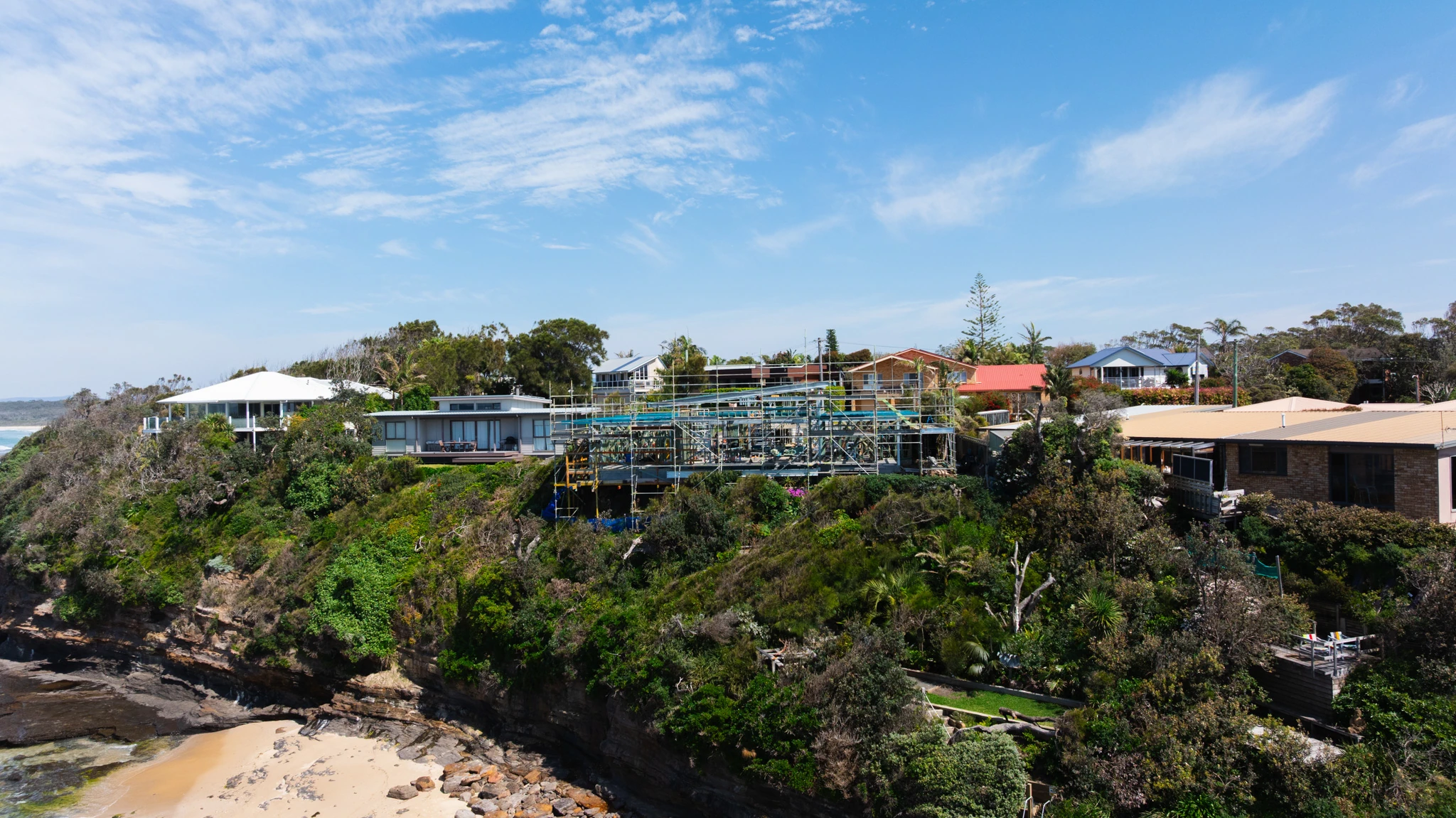
A home near Jervis Bay, Huskisson, Mollymook, Ulladulla, Culburra Beach or another South Coast location can face exposure to salt air, strong winds, moisture, challenging access and site-specific drainage requirements. The design also needs to respond to the way you want to live.
A capable coastal home builder should understand these factors before construction starts rather than discovering them halfway through the build.
I would also look beyond the builder’s portfolio. Ask yourself:
- Do they understand coastal construction?
- Can they explain costs clearly, without relying on vague allowances?
- Do they have a clear pre-construction process?
- Will you know who is managing your project?
- Can they show evidence of similar completed projects?
The cheapest quote might look attractive initially, but a low number can become much less impressive once variations start appearing. A detailed proposal that explains the scope, assumptions and potential cost drivers can be far more valuable.
1. How Much Experience Do You Have With Coastal Homes?
This should be one of your first questions.
Building near the coast is not exactly the same as building inland. Salt exposure, weather conditions, site access, drainage, material selection and long-term durability can all influence construction decisions.
Ask the builder about previous coastal projects and, more importantly, ask what they learned from them.
A coastal home builder with relevant experience should be able to talk comfortably about:
- Coastal site conditions
- Durable exterior materials
- Corrosion considerations
- Moisture management
- Insulation and energy performance
- Storm and wind exposure
- Site access and logistics
- Drainage and water management
Do not settle for “Yes, we build near the beach.” Ask for examples.
A useful follow-up question is, “What would you do differently on my site because it is coastal?”
The answer can tell you a lot.
If the builder immediately starts discussing the site’s exposure, orientation, materials, drainage and construction details, you are probably having a productive conversation. If the answer sounds like a rehearsed sales line, keep digging.
2. What Exactly Is Included in the Contract cost?
This section is where things can get interesting - and by interesting, I mean expensive.
Before signing with a coastal home builder, ask the builder to walk you through the entire cost. Do not just look at the big number at the bottom of the quote.
Ask what the cost includes and, equally importantly, what it does not include.
Look at items such as:
- Site preparation
- Excavation
- Engineering
- Council and approval costs
- Landscaping
- Driveways
- Retaining walls
- Electrical connections
- Plumbing connections
- Flooring
- Appliances
- Lighting
- Joinery
- External works
- Allowances and provisional sums
You should also understand what assumptions the builder has made when preparing the estimate.
For example, if the quote assumes normal soil conditions but your site requires additional excavation or engineering, your final cost could change.
A detailed conversation at this stage can feel slightly tedious. I promise it is much less tedious than discovering an unexpected five-figure variation halfway through your build.
3. How Will You Handle Variations and Unexpected Costs?
Even the best-planned project can encounter changes.
You might decide to upgrade a kitchen finish. Engineering requirements might change. Your council might request an adjustment. An unexpected site condition could also affect the work.
The important thing is not whether variations can occur. It is how your Coastal Home Builder manages them.
Ask:
“How do you approve variations, and will I receive the cost before the additional work starts?”
Please ensure the process is clearly explained.
In NSW, variations for residential building work need to follow specific requirements, and significant contract changes should not simply happen through a casual conversation on site. NSW Government guidance on residential building contracts
I also recommend asking how the builder manages allowances and provisional sums. A quote packed with vague allowances can make comparison difficult because two builders may appear to offer similar budget expectations while making very different assumptions.
Your goal is simple: understand the likely final cost before you commit.
4. What Is Your Expected Construction Timeline?
“About six months” sounds reassuring until six months stretches to eight, then nine, and somehow you find yourself celebrating Christmas in a house that still needs a bathroom door.
Ask your Coastal Home Builder for a realistic construction timeline and discuss the major stages.
Depending on your project, the timeline may include:
- Pre-construction planning
- Approvals and documentation
- Site preparation
- Foundations
- Structural construction
- Roofing and external works
- Services and internal construction
- Cabinetry and finishes
- Final inspections
- Handover
Do not only ask, “When will you finish?”
Ask:
- What factors could delay the project?
- How do you manage wet weather?
- How far ahead do you schedule trades?
- How will you communicate delays?
- Who will update me about progress?
- What happens if materials become unavailable?
A reliable builder should not promise the impossible just to win your business. I would rather hear a realistic timeline with clear assumptions than an optimistic promise that falls apart three months later.
5. Who Will Manage My Project Day to Day?
This question often gets overlooked.
You might meet the business owner during the sales process, but that does not necessarily mean they will personally manage your project every day.
Ask who your main point of contact will be once construction starts.
Find out:
- Who supervises trades?
- Who manages subcontractors?
- Who handles site issues?
- How often will you receive updates?
- How can you raise concerns?
- Who approves changes?
- How often can you visit the site?
Communication matters because building a home involves hundreds of decisions. You would rather not spend your evenings wondering whether the electrician, carpenter or cabinetmaker received the latest information.
A Coastal Home Builder should give you a clear communication process from the beginning.
The best experience usually comes when everyone understands who does what, when decisions need to happen and how information moves between the homeowner, builder, designer and trades.
6. What Materials and Construction Methods Do You Recommend for Coastal Conditions?
This stage is where you can separate genuine coastal expertise from generic building talk.
Your coastal home builder should be able to explain why they recommend particular materials and construction methods for your site.
Ask about:
- External cladding
- Roofing materials
- Windows and glazing
- Fasteners and fixings
- Waterproofing
- Insulation
- Ventilation
- Corrosion resistance
- External coatings
- Energy efficiency
You should also discuss how the home’s orientation and design respond to sunlight, prevailing winds and the local environment.
A well-designed coastal home should not only look beautiful on Instagram. It should remain comfortable, durable and practical after the novelty of the first housewarming party wears off.
High-performance construction can also make a meaningful difference to everyday comfort. Good insulation, thoughtful glazing, airtight construction and sensible solar orientation can help create a home that feels more comfortable throughout the year.
7. Can you please show me similar completed projects and references?
Finally, ask for evidence.
A coastal home builder should be comfortable discussing previous work that reflects the type, scale or complexity of your project.
Look beyond polished portfolio photographs. Ask about their actual building experience.
If possible, ask previous clients:
- Was communication consistent?
- Did the project stay close to budget?
- How did the builder handle variations?
- Were problems addressed quickly?
- Was the site well managed?
- Did the finished home match the plans?
- Would you choose the same builder again?
That final question is particularly useful.
You should also check the builder’s licence details and make sure the contracting entity matches the relevant licence information. For larger residential projects, NSW requirements also cover compensation insurance for home building and other contract essentials. The NSW government provides detailed guidance for homeowners before they sign. NSW Government residential building contract requirements
Please do your homework before you sign. Ten minutes of checking now can save months of frustration later.
What Should You Compare Before Choosing a Builder?
When you have two or three builders on your shortlist, avoid comparing quotes on cost alone.
Use a simple comparison like this:
What to compare
Why it matters
Relevant coastal experience
Shows the builder understands local conditions
Contract inclusions
Helps prevent unexpected costs
Allowances
Reveals where the final cost may change
Project timeline
Helps you plan your finances and move
Communication process
Keeps decisions and updates organised
Construction quality
Influences durability and long-term value
References
Gives you insight into the actual client experience
Pre-construction process
Helps identify risks before construction begins
The right coastal home builder may not always submit the lowest initial cost. Instead, look for the builder who gives you confidence that the cost, scope, timing and responsibilities make sense.
What Are the Red Flags I Should Watch For?
Occasionally what a builder doesn’t tell you matters just as much as what they do.
Be cautious if you encounter:
- Pressure to sign immediately
- Extremely vague quotes
- Unclear contract inclusions
- Reluctance to discuss variations
- Promises that sound too good to be true
- Poor communication before the contract
- No clear project management process
- Difficulty providing relevant references
- Unwillingness to explain allowances
- A cost that looks dramatically lower than comparable quotes without a clear reason
I would also pay attention to how you feel during the early conversations.
If you ask a straightforward question and receive a straightforward answer, that is a reassuring sign. If every question leads to another sales pitch, consider slowing down.
Questions to Ask Yourself Before You Sign
Before putting pen to paper, step back from the excitement for a moment.
Ask yourself:
Do I understand exactly what I am paying for?
Do I know what could increase the cost?
Do I understand the expected timeline?
Do I know who will manage my build?
Does the builder understand my site’s coastal conditions?
Have I checked the builder’s previous work and references?
Am I comfortable asking difficult questions before construction starts?
If you cannot confidently answer these questions, I would not rush the contract.
The NSW South Coast is a brilliant place to build a home, but the location deserves thoughtful planning. From Nowra and Shoalhaven to Jervis Bay, Culburra Beach, Huskisson, Mollymook and Ulladulla, every site has its personality - and occasionally its own little surprises.
Conclusion
Choosing a builder is one of the biggest decisions you will make during your home-building journey. So, before you get distracted by marble benchtops, oversized sliders and that very tempting freestanding bath, slow down and ask the important questions.
A great coastal home builder should be willing to discuss openly their experience, cost planning, variations, timelines, project management, materials and previous work. More importantly, they should help you understand the path ahead rather than simply trying to get you across the contract line.
Your South Coast home deserves more than a pretty design. It deserves careful planning, suitable materials, thoughtful construction and a builder who understands the environment in which it will stand.
If you are planning a custom coastal home, renovation or knockdown rebuild on the NSW South Coast, get in touch with our team to discuss your project and take the next step with greater clarity and confidence.
FAQs About Choosing a Coastal Home Builder
What should I look for in a coastal home builder?
Look for relevant coastal construction experience, transparent cost planning, strong communication, appropriate licensing, quality workmanship and a proven history of completing similar projects. A good builder should also explain the risks and cost drivers associated with your particular site.
How much deposit can I pay a builder in NSW?
For residential building work covered by NSW home building contract requirements, the deposit generally cannot exceed 10% of the contract cost. Always check the current NSW requirements and your specific contract before making a payment.
Why is coastal building different from standard home building?
Coastal sites can expose homes to salt air, moisture, strong winds and other environmental conditions. Material selection, durability, drainage, ventilation, glazing and construction detailing can therefore require additional consideration.
Should I choose a clearly scoped contract?
A clearly scoped contract can provide greater cost certainty, but you should still understand exactly what the contract includes, what allowances apply and how variations work. “clearly scoped” does not automatically mean that every possible project cost is covered.
How do I compare two home builder quotes?
Should I visit a builder’s previous projects?
Yes, where possible. Reviewing completed projects can help you assess workmanship, design quality and how well the builder handles homes similar to yours. Speaking with previous clients can also reveal what the building experience was actually like.
When should I involve a builder in the design process?
I recommend involving your builder as early as practical, particularly for a complex coastal site. Early input can identify buildability issues, cost drivers, site constraints and construction considerations before you lock yourself into a design.