If you have been comparing building quotes and wondering what a “prime cost item” actually means, you are not alone. It is one of those terms that shows up regularly in residential building contracts, sounds reasonably official, and often gets skimmed past without much thought.
The problem is that prime cost items can have a real impact on your final spend. If you do not understand how they work, it is easy to think you are comparing fixed budget expectations when a meaningful part of the quote is still only an allowance.
For homeowners planning a custom home, renovation, or extension in the Shoalhaven, that matters. The difference between an allowance that looks acceptable on paper and the products you actually want in the finished home can add up quickly.
What a prime cost item actually is
A prime cost item, usually shortened to PC item, is an allowance in the contract for a specific product that has not been selected at the time the quote is prepared or the contract is signed.
In simple terms, the builder is saying: we know this item needs to be supplied, but the exact make, model, or finish has not been chosen yet, so we have allowed a figure that we believe is reasonable for now.
Common prime cost items include:
- Tapware and mixers
- Basins, toilets, and baths
- Kitchen appliances
- Door hardware
- Tiles
- Light fittings
- Floor finishes
- Cabinet handles and smaller joinery hardware items
The important point is this: a prime cost item is not a fixed final amount. It is an allowance. If the product you ultimately choose costs more than the allowance, you pay the difference. If it costs less, you should receive a credit. Depending on the contract, the adjustment may also include the builder’s margin on that difference.
Why prime cost items matter more than most homeowners realise
On a small number of items, the difference might be manageable. Across a whole home, it can become significant very quickly.
They can make a quote look lower than the finished job is likely to be
This is the first trap. A quote might include a PC allowance that looks fine in isolation, but only because it reflects an entry-level product rather than the standard you actually want.
They hide the gap between expectation and specification
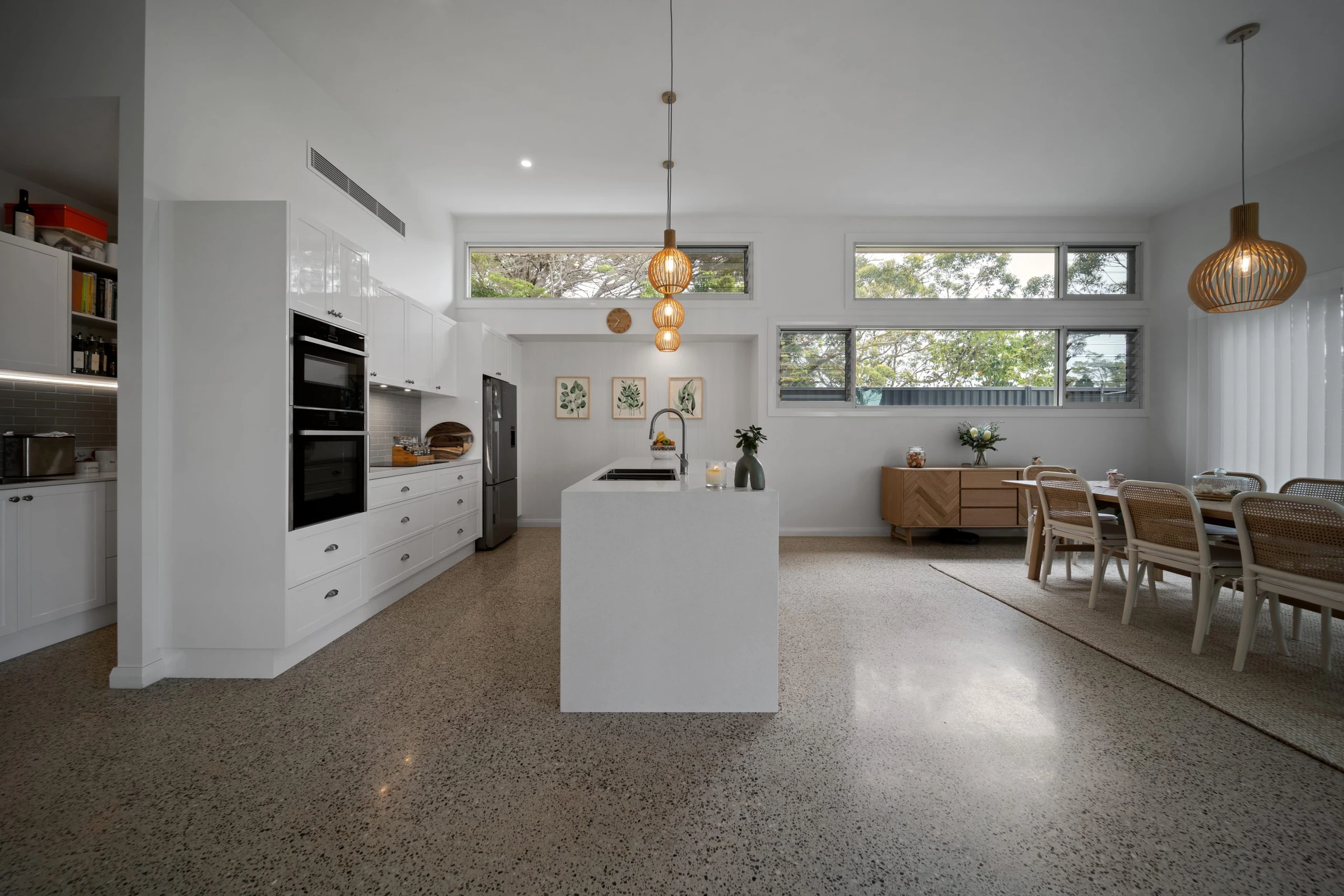
This is where many homeowners get caught. They look at a quote for a well-designed coastal home and assume the fittings and finishes reflected in the visuals are what the quote is cost planning. Sometimes they are. Sometimes the drawings and inspiration images are carrying one level of expectation while the PC allowances in the contract are carrying another.
That mismatch is not always intentional, but it still creates the same outcome: you think the quote includes one standard of finish, then discover later that achieving that standard means spending more.
They multiply across the house
A single PC item overrun might not be a problem. Ten or twenty of them can be. Kitchen appliances, bathroom fittings, laundry fixtures, lighting, flooring, and tile upgrades all move separately, but they land in the same budget.
That is why prime cost items deserve attention even when no single allowance looks alarming on its own.
Prime cost items are different from provisional sums
These two terms are often mentioned together, but they are not the same thing.
A prime cost item is an allowance for a product that has not been selected yet.
A provisional sum is an allowance for a scope of work where the builder cannot accurately determine the full cost at contract stage.
So if the uncertainty is about what tapware, bath, oven, or floor tile you will choose, that is usually a PC item. If the uncertainty is about how much excavation, drainage, demolition, or site work will actually be required, that is usually a provisional sum.
We recently broke down provisional sums in more detail here: What Is a Provisional Sum - and Why Should You Be Wary of Them?
Both matter because both affect how much of the contract cost is genuinely fixed and how much is still subject to movement later.
What to look for in a building quote
If you want to understand whether the allowances in a quote are realistic, these are the things worth checking before you sign anything.
List every PC item separately
Do not just glance at the total contract figure. Pull every prime cost item out of the quote and review them as their own list. That is the only way to see how much of the contract depends on future selections.
Ask what standard each allowance is based on
Compare the allowances to real products
If you already have a sense of your taste, take the PC schedule and compare it against actual retail or supplier cost planning. You do not need to finalise every selection before contract, but you do want to know whether the allowances are even in the right postcode.
Pay attention to wet areas and kitchens
This is where the biggest differences often sit. Bathrooms and kitchens can move fast when allowances are too light. Tiles, mixers, basins, toilets, appliances, and joinery accessories all stack up in those spaces.
Check whether builder’s margin applies to the difference
This is important and often overlooked. If your chosen product costs more than the PC allowance, the contract may allow the builder to add margin to that increase as well. That is not automatically unreasonable, but you do want to know whether it applies so you understand the true cost of upgrading later.
Why this matters on South Coast custom builds
Prime cost items are relevant on every residential project, but they can matter even more on design-led South Coast homes because the specification level is often part of what makes the project feel right.
Coastal homes are rarely just about floor area. They are about the details that shape how the home lives over time: durable fittings, appropriate finishes, tapware that suits the environment, lighting that works properly, and wet-area products that match the overall standard of the build.
On a premium custom project, it does not take much for low allowances to start feeling out of step with the design brief. A quote can appear competitive on paper, but if the PC schedule is undercooked, the real number comes later through selections.
That is one of the reasons comparing quotes is so difficult in the first place. We covered that broader issue here: Why Are Builder Quotes So Different? What Shoalhaven Homeowners Need to Look At Before Comparing budget expectations
The better approach is to reduce allowances early
The cleanest way to reduce PC risk is simple: make more selections before the contract is signed, or at least narrow them down enough that the allowances are based on reality rather than generic assumptions.
That does not mean every last detail needs to be finalised on day one. It does mean the quote should reflect the level of finish you are actually aiming for.
Early Contractor Involvement means this: We get involved early and price the build while the design can still change, so there are no surprises later.
This is a big part of why Early Contractor Involvement works so well on custom homes. When the builder is involved early enough, there is more time to align design intent, product expectations, and cost planning before things are locked in. Instead of relying on rough allowances, you can progressively replace assumptions with real decisions.
If you want a clearer picture of that process, this piece is worth reading next: What is Early Contractor Involvement (ECI) and Why It Matters for Your Custom Home Build
Questions worth asking your builder before signing
These questions usually tell you very quickly whether the allowances in the quote have been thought through properly:
- Can you walk me through every prime cost item in the quote?
- What standard of product is each allowance based on?
- Which allowances do you think are most likely to move once selections are made?
- Does the contract apply builder’s margin to PC adjustments?
- What would you recommend selecting now so the cost is more reliable before contract?
A good builder should be able to answer those questions clearly, without getting defensive, and without making you feel like you are being difficult for asking.
A final word
Prime cost items are not automatically a red flag. They are a normal part of residential construction when selections are still underway. The issue is not that they exist. The issue is when the allowances are too light, too vague, or too disconnected from the finish level the homeowner is actually expecting.
Before you sign any building contract, it is worth taking the time to understand how much of the cost is genuinely fixed, how much still depends on future selections, and whether the PC schedule reflects the home you are really trying to build.
If you are planning a custom home, renovation, or extension in the Shoalhaven and want a quote that is grounded in proper scoping rather than optimistic allowances, Start your project here. A clear conversation up front usually saves a lot of stress later.