If you’ve received a building quote recently, there’s a good chance you’ve seen the words “provisional sum” somewhere in the document. You may have noted the figure next to it and moved on. Most people do. It’s one of those contract terms that sounds technical and reassuring at the same time - like someone has thought about it and put a number on it.
The reality is somewhat different, and understanding what provisional sums actually are - and what they mean for your final building cost - is one of the most important things a homeowner can do before signing a building contract.
What a provisional sum actually is
A provisional sum (often abbreviated to PS in a quote or contract) is a estimated allowance included in a building contract for work that can’t be accurately priced at the time the contract is signed. It’s essentially a placeholder - the builder is saying “we know this work needs to happen, but we don’t know exactly what it will cost yet, so we’ve put in a figure we think is reasonable.”
Common items that attract provisional sums include:
- Excavation and earthworks where the ground conditions aren’t fully known
- Rock removal
- Drainage and stormwater works
- Electrical and hydraulic work in renovations where existing services haven’t been fully investigated
- Landscaping and external works
- Site-specific engineering requirements
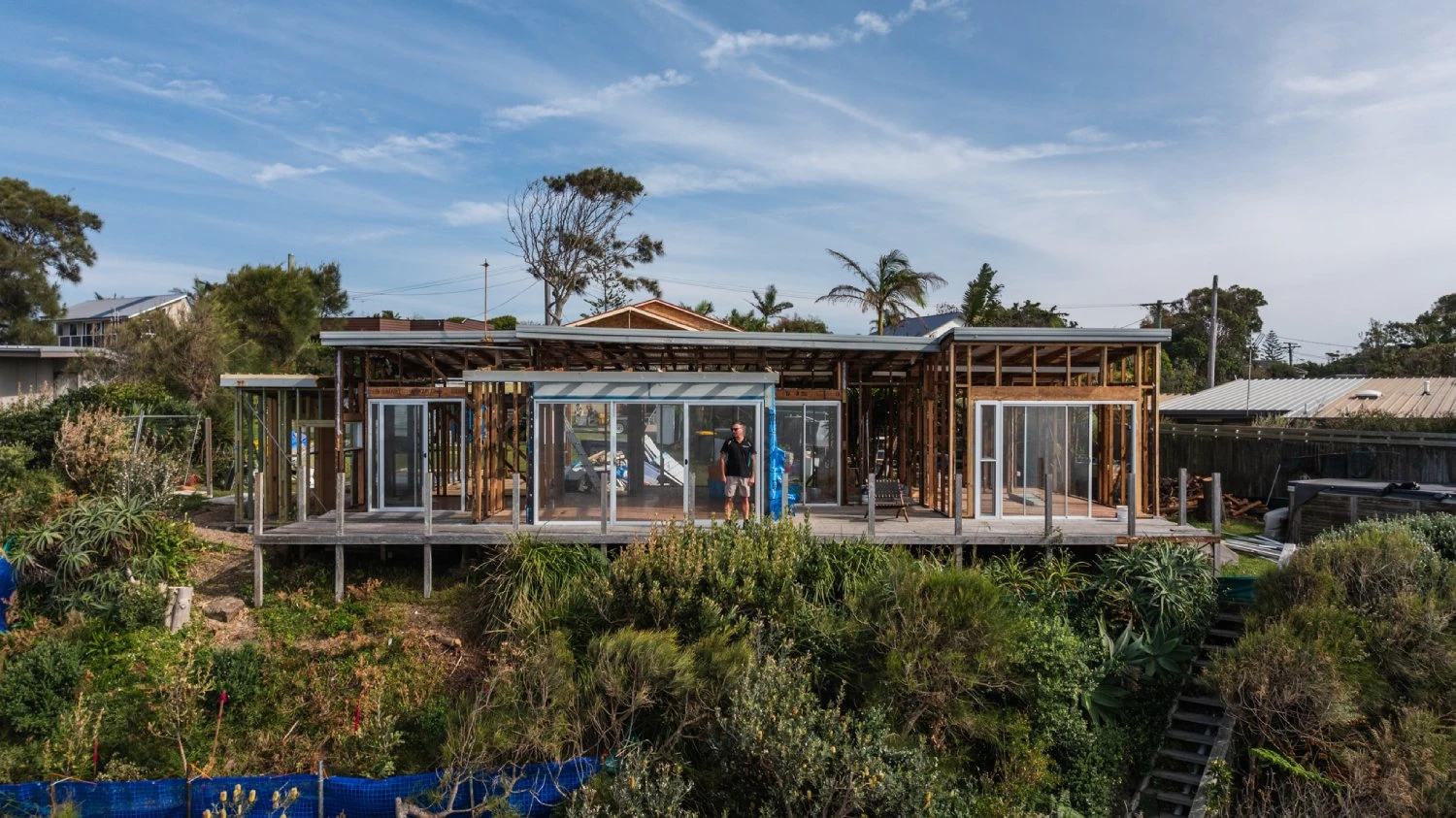
- Demolition where the extent of work isn’t fully understood
- Kitchen and bathroom joinery where selections haven’t been finalised
- Flooring, tiling, and other finishes where products haven’t been chosen
The critical thing to understand is this: a provisional sum is not a clearly scoped. It is an estimate. And when the actual cost of that item is known - which usually happens during construction - the provisional sum is replaced with the real figure. If the real figure is higher than the provisional sum, you pay the difference. If it’s lower, you get a credit.
That sounds reasonable in principle. In practice, it’s one of the most reliable sources of budget blowout in residential construction.
Why provisional sums are a problem
The issue with provisional sums is not that they exist - sometimes a degree of uncertainty is genuinely unavoidable, particularly in renovations where you can’t know what’s behind the walls until you open them up. The issue is how they’re used, and how wide the gap between the provisional figure and the real cost can be.
They can be used to make a quote look more competitive than it really is
This is the most important thing to understand. A builder who wants to win a job can include a provisional sum at a low figure - not because they genuinely believe that’s what the work will cost, but because it makes the overall quote number more attractive. The client signs the contract based on a total that includes that optimistic placeholder, and then discovers during construction that the actual cost is significantly higher.
This isn’t always dishonest - sometimes it reflects genuine uncertainty or inexperience with a particular type of work. But the effect on the client is the same regardless of the intent: you committed to a budget that wasn’t real.
They shift the risk from the builder to you
A clearly scoped means the builder wears the risk if their costs come in higher than expected. A provisional sum means you wear that risk. If the excavator hits rock that wasn’t anticipated, if the existing electrical system turns out to need more work than expected, if the drainage requirements turn out to be more complex than the original assessment suggested - under a provisional sum, those additional costs come back to you as variations.
On a project with a lot of provisional sums, you can find yourself absorbing risk across multiple items simultaneously, with no reliable way to know what your final cost will be until you’re well into construction and already committed.
The figures are often not conservative enough
Even when a provisional sum is included with genuine intent, the figure chosen can be optimistic. A builder may not have visited the site, not have obtained specialist advice, or simply be working from experience on a different type of site. On the South Coast in particular - where site conditions vary considerably between a flat residential block and a waterfront property, a sloping coastal site, or a block adjacent to national park - provisional sums for earthworks, drainage, and site-specific engineering can be miles away from the actual cost if they haven’t been properly assessed.
They make it almost impossible to compare quotes accurately
This is one of the core reasons building quotes are so hard to compare, and it’s why looking at the bottom line alone is never sufficient.
The difference between a provisional sum and a prime cost item
These two terms are often confused, and it’s worth understanding the distinction.
A provisional sum covers a defined scope of work where the cost is uncertain - the builder is estimating both the materials and the labour to complete that item.
Provisional sums are harder to evaluate because they relate to work rather than products, and assessing whether the figure is realistic requires site knowledge and construction experience that most clients don’t have.
What to look for in a quote
When you’re reviewing a building quote, here’s how to approach provisional sums and prime cost items:
List all of them out separately. Go through the quote and identify every item that is either a provisional sum or a prime cost allowance. Add them up. On some quotes, the total of all provisional sums and PC items can represent a substantial proportion of the overall contract value - which means that proportion of your budget is not fixed.
Ask the builder to justify each provisional sum figure. How did they arrive at that number? Have they assessed the site? Have they spoken to the relevant subcontractors or specialists? Is it based on a recent similar project? A builder who can give you a clear, evidence-based answer to those questions is in a different position to one who has used a generic figure.
Ask whether a site investigation would allow the figure to be fixed. For some provisional sums - particularly earthworks and drainage - it’s possible to get a more accurate picture before signing through a geotechnical assessment, a drainage survey, or a site visit from the relevant subcontractor. The cost of that investigation is usually small relative to the uncertainty it resolves.
Check whether PC allowances reflect your actual intentions. If you have a clear sense of the specification level you’re building to, look at the PC allowances and ask whether they’re realistic for that standard. Don’t assume that the builder’s allowance matches your expectation - ask them directly what they think that figure will buy.
Compare the total of provisional sums and PC items across quotes. Two quotes with similar bottom lines can look very different when you compare how much of each is fixed versus provisional. The quote with more fixed cost planning is generally giving you a more reliable picture, even if the number feels higher.
Why this matters more on the South Coast
In the Shoalhaven, provisional sums carry more risk than they do in a straightforward suburban context, because the site-specific variables that drive construction costs are more significant and more varied.
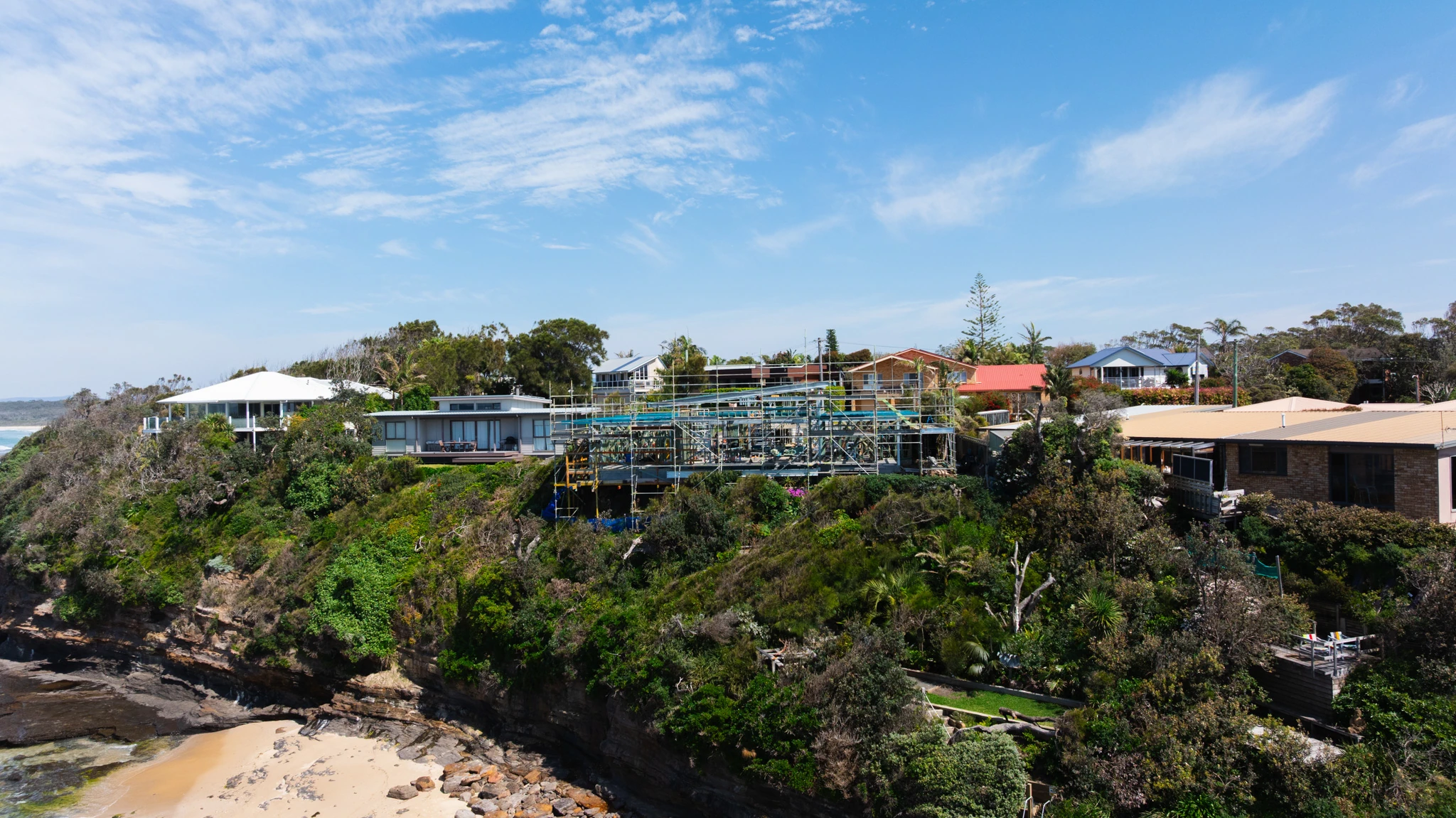
Excavation costs can shift dramatically depending on ground conditions - what’s routine on a flat residential block in a Sydney suburb can become a major cost item on a sloping coastal block where rock is encountered, or on a lake-adjacent property where soil conditions near the water’s edge require careful management. Drainage requirements vary enormously across the region depending on slope, proximity to waterways, and council requirements. Bushfire construction requirements, where a BAL rating applies, can add significantly to costs if they haven’t been properly assessed before cost planning.
A builder with genuine experience across the Shoalhaven will approach these items differently to one who is working from generic figures. They’ll know which sites are likely to hit rock, which areas have challenging drainage, which coastal zones require upgraded materials and fixings. That knowledge allows them to cost with fewer assumptions - and fewer provisional sums - which ultimately gives the client a more reliable picture of what the project will actually cost.
The alternative: clearly scoped contracts built on proper scoping
The best protection against provisional sum blowout is a building contract where the scope has been thoroughly developed before the cost is agreed, so that the unknowns that generate provisional sums have been properly investigated and resolved.
This is the philosophy behind our ECI process. Rather than cost planning a project from incomplete documentation and filling the gaps with provisional sums, we work alongside clients and their designers during the design phase to identify and resolve the site-specific variables that would otherwise become provisional items. We assess ground conditions, drainage requirements, BAL ratings, access constraints, and any other site-specific factors before design is finalised - so that by the time a contract is signed, those items can be priced on the basis of real information rather than estimates.
The result is a clearly scoped contract that means what it says. Not a clearly scoped with a long list of provisional sums that collectively represent a significant risk to the budget, but a genuinely clearly scoped where the scope has been properly examined and the cost reflects reality.
That’s a fundamentally different proposition to a quote built on optimistic provisional sums - and it’s why we believe the ECI approach protects clients in a way that the traditional tender process often doesn’t.
Questions worth asking any builder before you sign
Before committing to a building contract that contains provisional sums, these are the questions worth putting to your builder directly:
“Can you walk me through each provisional sum and explain how you arrived at that figure?” A builder who can answer this clearly and specifically is in a much stronger position than one who gives a vague answer.
“What’s the range of outcomes on this provisional sum - what’s the best case and what’s the worst case?” This gives you a sense of your actual exposure, rather than just the midpoint estimate.
“What would it take to convert this provisional sum to a clearly scoped before we sign?” Sometimes additional investigation before contract - a geotechnical report, a subcontractor visit, a more detailed design - can eliminate a provisional sum entirely.
“How have provisional sums been managed on your recent projects - have they come in above or below the allowance?” Past performance isn’t a guarantee, but a builder who can speak honestly and specifically to this question is demonstrating a level of transparency that matters.
“What’s the total value of provisional sums and PC items in this contract as a proportion of the overall cost?” This number tells you how much of your budget is actually fixed and how much is still at risk.
A final word
Provisional sums are a normal part of building contracts, and in some situations they are genuinely unavoidable. The problem isn’t their existence - it’s when they’re used as a way to make a quote look more competitive than it really is, or when the figures are set without proper investigation of the actual costs involved.
As a homeowner, your job is to understand how much of your quoted cost is genuinely fixed and how much is still an estimate - and to make sure that any provisional sums in your contract are based on proper assessment rather than optimistic guesswork. The time to do that work is before you sign, not after construction has started and your options are limited.
If you are planning a custom home, renovation, or extension in the Shoalhaven and want to understand what a properly scoped, clearly scoped contract looks like in practice, we’re happy to walk you through it. The conversation costs nothing, and the clarity it provides is worth considerably more than that.